

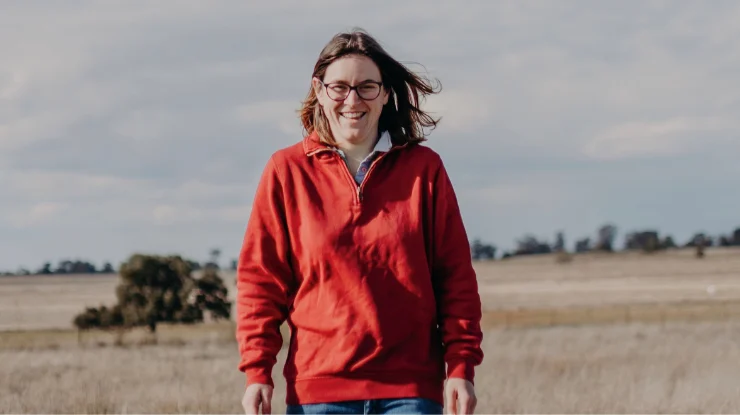
莎莉·特纳荣获2026年由澳大利亚肉类及畜牧业协会支持的努菲尔德澳大利亚奖学金。图片来源:Essjay摄影
莎莉·特纳是2026年由澳大利亚肉类及畜牧业协会支持的努菲尔德奖学金获得者,她希望改变生产者对待农场行政工作的方式。她的愿景是让生产者不再将文书工作视为枯燥但必要的任务,而是将其视为能够提高效率和农场生产力的战略工具。
她计划利用奖学金提供的国际旅行机会,收集全球各地企业如何成功采用优化且可扩展的管理体系和工具的案例。
认识行政管理工作的价值
莎莉的研究提案因其与国家农民联合会2030路线图中关于金融素养、数字技术采纳和治理改革的目标相契合,而成为一个独特且及时的主题。
她的研究课题《重新定义农场管理:建立韧性、盈利农业企业的心态、技能与体系》引起了评委的关注。
“我很高兴澳大利亚肉类及畜牧业协会看到了行政管理的价值——我已经习惯了人们认为行政管理对农业来说是个有点无聊的话题,”她说道。
心态的转变
莎莉是一位农业咨询顾问,也是新南威尔士州特伦德尔地区的生产者。她和丈夫大卫经营着一个自繁自育的美利奴羊群,生产优质羔羊并种植谷类作物。这意味着莎莉无论是在牧场还是办公室,都拥有丰富的农场管理经验。
通过她在Ag Opti Systems公司的咨询工作,她帮助农场企业优化工作健康与安全、人力资源、行政管理、数据管理和簿记等方面的运营。
“很多人认为,要提高生产效率,就必须埋头在畜栏里干活,如果你坐在办公室里,就不是真正在工作,”她说道。
“我希望鼓励人们看到,高效的管理体系对企业的价值其实非常高。”
技能培养
莎莉解释说,通过在金融素养等领域提升技能,生产者将能更好地理解自己的数据及其所传达的信息。
“这是巨大的一步——即便是基本的行政管理技能也大有裨益。许多生产者经营着高效、价值数百万澳元的企业,也需要以相应的方式来管理这些企业,”莎莉说道。
“明智的做法可能是将部分工作外包或引入员工,以帮助填补企业中的知识或技能空白。”
可扩展的体系
莎莉和她的丈夫优先在其业务中建立稳固的体系和流程,以最大限度地提高效率和生产力。
“我们对任务进行规划,而不是随机行事。这可以是扩大收入和利润规模,并利用体系让业务更高效,这有助于我们发现可能错失的机会,”莎莉说道。
一个例子是他们的业务沟通流程,包括每周例会以及专门的季度战略会议。
“这帮助我们建立专注力,这样我们就不用同时应付无数件事情。在我们举行的各类会议中,我们既有每周、每月的关注点,也有更全面的战略重点,”莎莉说道。
解决低效问题
莎莉实施了准确、简化的库存管理,从而切实提高了畜栏的工作效率。这包括将所需设备存放在羊圈附近以便取用,并确保有备用品可用。
“像这样简单的事情可以减少压力、节省时间,让你专注于完成工作,”她说道。
个人成长
虽然努菲尔德奖学金的海外考察行程将使她暂时离开自己的农场,但莎莉认为,专注于个人成长的机会从长远来看将带来丰厚回报。
“愿意走出自己的舒适区,去与世界各地的从业者交流他们的业务和体系,这将让我获得许多技能,并把这些技能带回家,”她说道。
“我们的业务正处于成长阶段,我出国在外会带来一些挑战,但这也迫使我思考,在我离开期间如何让业务更高效地运转。”
国际视野
莎莉热衷于研究国际上良好的企业管理案例,以及各国政府如何支持生产者提升技能。例如,在英国,生产者完成金融素养培训后可获得税收减免;而在澳大利亚,电子国家供应商声明(eNVD)和牲畜生产保证(LPA)计划则为改进企业数据收集提供了机会。
“与其把它们仅仅视为额外的文书工作,不如将其视为改进畜牧企业的契机。”
消息来源:MLA
Building scalable systems for stronger farm businesses
Sally Turner received the 2026 MLA‑supported Nuffield Australia Scholarship. Image: Essjay Photography
Sally Turner, the MLA-supported recipient of a 2026 Nuffield Scholarship, wants to see a shift in how producers approach their farm admin. Her vision is for producers to no longer view the bookwork as a mundane but necessary task, but rather a strategic tool that can drive greater efficiency and business productivity.
She plans to use the international travel opportunities offered as part of her scholarship to gather examples of how businesses around the world are successfully harnessing optimised and scalable administration systems and tools.
Seeing the value in admin
Sally’s research proposal stood out as a unique and timely topic due to its alignment with the National Farmers’ Federation 2030 Roadmap goals around financial literacy, digital adoption and governance reform.
Her research topic, ‘Reframing farm administration: mindset, skills and systems for resilient, profitable ag businesses’ caught the eye of the judges.
“I was pleased MLA saw value in administration – I’m used to people thinking admin is a bit of a boring topic for agriculture,” she said.
A change in mindset
Sally is an agricultural consultant and producer at Trundle, NSW, where she and her husband David run a self-replacing Merino flock, produce prime lambs and grow cereal crops. This means Sally has plenty of experience of farm management, both in the paddock and in the office.
Through her consultancy work at Ag Opti Systems, she helps farm businesses fine-tune their work health and safety, human resources, administration, data management and bookkeeping.
“A lot of people think that to be productive, you have to get stuck into jobs in the yards and that if you’re in the office, you’re not really working,” she said.
“I want to encourage people to see that efficient administrative systems are actually of high value to a business.”
Skill building
Sally explained that by upskilling in areas like financial literacy, producers will have a better understanding of their numbers and what they are telling them.
“That’s a huge step – even general admin skills are helpful. Many producers are running productive, multimillion dollar business and need to run them as such,” Sally said.
“It can be wise to outsource or bring an employee in to help fill any knowledge or skill gaps in a business.”
Scalable systems
Sally and her husband prioritise solid systems and procedures in their business to maximise efficiency and productivity.
“We plan our tasks rather than just doing them randomly. It could be scaling our revenue and profits and using systems to make our business more efficient, which helps us see where we might be missing opportunities,” Sally said.
An example is their business communication processes, which include weekly meetings as well as dedicated strategic, quarterly meetings.
“This helps us build focus, so we’re not just juggling 10,000 things at once. We have weekly, monthly but also a more overall, strategic focus at the various types of meetings we hold,” Sally said.
Fixing inefficiencies
Sally has implemented accurate, streamlined inventories which have improved efficiencies in the yards in a practical way. This includes storing required equipment at the sheep yards so it’s easily accessible and ensuring spare products are on-hand.
“Simple things like this reduce stress, save time and let you focus on getting the job done,” she said.
Personal growth
While the Nuffield travel component will take her away from her business, Sally sees the opportunity to focus on her personal growth as something that will pay dividends in the long run.
“Being willing to step outside my comfort zone and go and talk to other people from around the world about their businesses and systems will equip me with so many skills that I can bring back home with me,” she said.
“Our business is in a growth phase, so it will be challenging having me away overseas, but it’s also forced me to think about how we can run the business more efficiently while I’m away.”
An international perspective
Sally is keen to investigate international examples of good business administration and how governments support producers to upskill. For example, in the UK, producers get a tax rebate if they complete financial literacy training, while here in Australia, electronic National Vendor Declaration (eNVD) and Livestock Production Assurance (LPA) provide opportunities to improve business data collection.
“Rather than seeing them as just extra required paperwork, they can be an opportunity to improve livestock businesses.”
Source:MLA

