

核心要点
2026年8月,重型羔羊交易价格较贸易型羔羊每公斤活重折价58美分,远低于长期平均溢价水平。
母羊屠宰量是重型羔羊相对贸易型羔羊溢价走势与幅度的可靠指标。
成本压力持续上升,促使加工企业执行更为严格的胴体规格标准。
羔羊价格与季节状况之间的关联已广为人知。但不太容易察觉的是,季节条件会显著影响贸易型羔羊与重型羔羊之间的价差,并造成该价差逐年大幅波动。
贸易型羔羊、重型羔羊相对于补栏羔羊的溢价水平,同样会受此影响。
两类羔羊,两类市场
贸易型羔羊体重较轻,适合国内零售市场。重型羔羊体型更大,育肥后供应出口市场。
加工商采购这两类羔羊以满足对应市场需求,但两类羔羊的价值会随季节条件与产品需求发生变化。
环境条件恶劣时期
在气候不佳的时节,牧草匮乏,羔羊增重难度加大。养殖户难以将羔羊育肥至大体重,可供出口的羔羊数量随之减少。
重型羔羊供应紧张,加工商便会支付溢价来完成出口订单。
与此同时,养殖户会抛售无力继续饲养的繁殖母羊,造成母羊屠宰量上升。
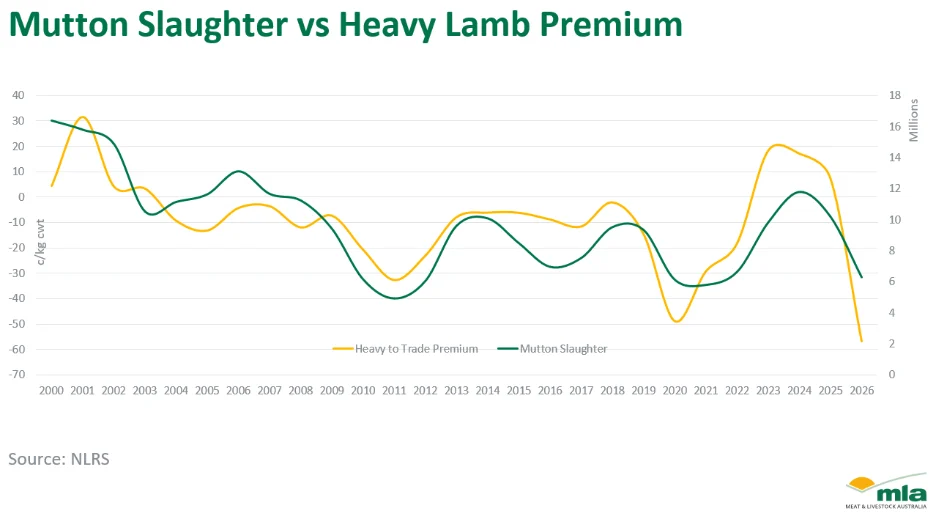
因此,母羊屠宰量可以作为反映季节状况的可靠指标(参见第二张图表)。
气候条件良好时期
降雨恢复、牧草长势好转时,养殖户会全力催肥增重,以求最大化单只收益。随着更多羔羊达到出口体重,重型羔羊供应量增加,溢价格局随之改变。
贸易型羔羊供应相对紧缺,引发加工商之间的收购竞争。于是传统溢价关系发生反转,贸易型羔羊价格反而高于重型羔羊。
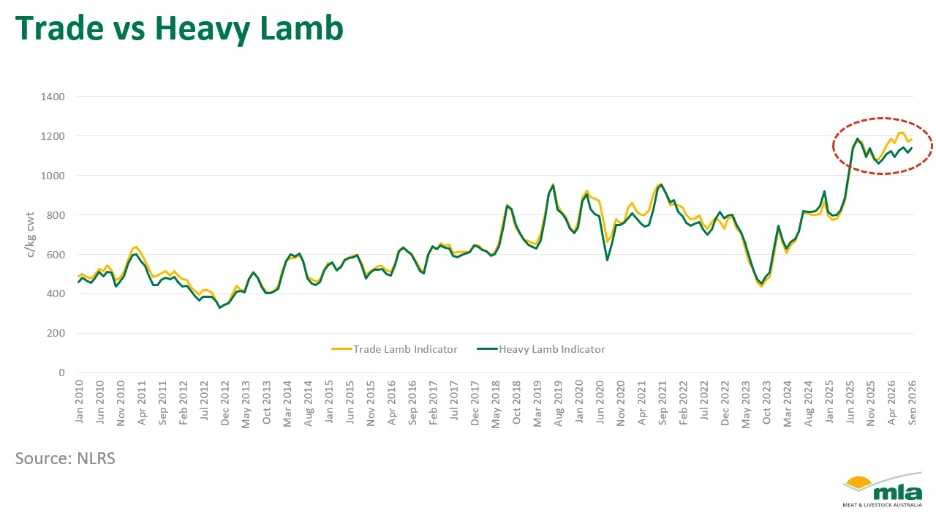
当前市场正处于这种状态。2026年6月,重型羔羊交易价较贸易型羔羊每公斤活重折价80美分,为有记录以来第二高月度折价,仅次于2020年8月。
到2026年8月,该折价收窄至每公斤活重58美分;而2010年以来长期平均折价为每公斤活重13美分。这表明市场正在响应改善的季节环境,羔羊供给结构由轻型贸易羔羊逐步转向达到出口体重的重型羔羊。
母羊屠宰量:溢价水平的预判指标
母羊屠宰量既是季节形势指标,也能有效预判重型羔羊溢价走势。
过去16年间,母羊屠宰量与重型羔羊溢价的相关系数为0.81;在全部26年数据样本中,二者相关系数维持在0.73。相关系数高于0.7,通常代表长期存在显著且可靠的关联关系。
母羊屠宰量上升,一般预示季节条件转差、养殖户加速清群。养殖户难以继续饲养羔羊直至达到大体重,重型羔羊供给收紧,支撑可供出口羔羊的溢价。
当母羊屠宰量回落,养殖户转入种群补栏阶段,牧草供给改善助力羔羊增重。更多羔羊达到大体重标准,溢价优势重新转向贸易型羔羊。
通过跟踪母羊屠宰指标,可较为准确预判价差波动的时间节点与波动幅度。
波动放大所有影响
季节变化越剧烈,贸易型羔羊与重型羔羊之间的价差就越大。若季节波动持续,养殖户和加工商都要做好准备,这类双向价格震荡会幅度更大、发生更频繁。
加工商面临的压力持续增加
加工商本就承受着牲畜高价与加工量下滑的双重压力,如今越来越难以消化不符合规格胴体带来的成本。
供应链流通的牲畜数量减少,固定分摊成本只能摊薄到更少的加工量上,进一步挤压利润空间。
加工商通常的应对办法是收紧分级标准,对体重、肥度指标不达标的胴体加大扣罚力度。但当前牲畜供给极度紧张,即便不少加工厂缩减产能,同行之间仍存在收购竞争,这在一定程度上限制了上述措施的执行力度。
展望后市
若有利的季节条件持续,贸易型羔羊大概率将维持相对重型羔羊的溢价。
倘若气候条件转差,该溢价将会收窄;如果遭遇长时间干旱,价格关系将反转,重型羔羊反而占据价格优势。
溢价与折价的波动幅度,和繁殖种群的补栏或清群行为密切相关。
随着气候模式波动性增强,这类周期性行情波动或将更加剧烈,给养殖户与加工商同时带来更多机遇与风险。
信息来源:澳大利亚肉类与畜牧业协会市场信息经理 斯图尔特·布尔
信息发布于2026年9月18日,发布时内容准确。
澳大利亚肉类及畜牧业协会(MLA)不对本刊物所载任何信息的准确性、完整性及时效性作出任何保证。用户使用或依赖本刊物任何内容,风险自行承担;因使用或依赖相关信息所造成的任何损失与损害,MLA概不承担任何责任。未经MLA事先书面许可,本刊物任何内容不得擅自转载、复制。凡使用MLA刊物、报告及相关信息,均须遵守MLA市场报告及信息使用条款。
消息来源:MLA
Why seasonal conditions drive the price gap between trade and heavy lambs
Key points
Heavy lambs traded at a 58¢/kg cwt discount to trade lambs for the month of August 2026, well below the long-term average premium.
Mutton slaughter is a reliable indicator of the direction and magnitude of heavy-versus-trade lamb premiums.
Rising cost pressures are increasing the incentive for processors to enforce tighter carcase specifications.
The relationship between lamb prices and seasonal conditions is well understood. What is less obvious is how seasonal conditions can significantly influence the difference between trade and heavy lamb prices – and the dramatic swing it can create year-on-year.
The same applies to the premium prices that trade and heavy lambs attract relative to restocker lamb prices.
Two types of lamb, two types of market
Trade lambs are lighter animals and suited to domestic retail. Heavy lambs are larger and finished for export markets.
Processors compete for both categories to service these markets, but their value shifts depending on both seasonal conditions and product demand.
When conditions are tough
In a poor season, pasture is scarce and weight gain is harder to achieve. Producers struggle to finish lambs at heavier weights, which means fewer export-ready animals are available.
With heavy lambs in short supply, processors pay a premium to fill export orders.
Producers simultaneously sell off breeding ewes they can no longer afford to carry, which drives higher mutton slaughter.
As a result, mutton kill provides a reliable signal of seasonal conditions (refer to second graph).
When conditions are good
When rainfall returns and pasture conditions improve, producers chase weight gain to maximise return per head. As more lambs reach export weights, heavy lamb supply increases and the premium shifts.
Trade lambs become relatively scarce, prompting competition among processors. As a result, the traditional premium relationship can reverse as trade lambs attract a higher price over heavy lambs.
This relationship is currently taking place within the market. In June 2026, heavy lambs traded at an 80¢/kg cwt discount to trade lambs – the second largest monthly discount on record behind August 2020.
The discount has since narrowed to 58¢/kg in August 2026 in comparison to the long-term average discount of 13¢/kg since 2010. This reflects a market responding to improving seasonal conditions as supply shifts from lighter trade lambs towards heavier export-weight lambs.
Mutton slaughter as a predictor of premiums
Mutton slaughter numbers are both a seasonal indicator and meaningful predictor of where heavy lamb premiums are heading.
Over the past 16 years, the correlation between mutton kill and the heavy-lamb premium has been 0.81. Across the full 26-year dataset, the relationship remained at 0.73. A value above 0.7 is typically considered a strong and reliable relationship over time.
When mutton slaughter rises, it typically signals deteriorating seasonal conditions and increased destocking trends. Producers are less able to carry lambs to heavier weights, which tightens heavy-lamb supply and supports premiums for export-ready animals.
When mutton slaughter falls and producers shift into flock-rebuilding mode, improved pasture availability encourages weight gain. As more lambs reach heavier weights, the premium shifts back towards trade lambs.
The timing and magnitude of the swing can be anticipated with reasonable confidence by tracking the mutton kill indicator.
Volatility amplifies everything
The more extreme the seasonal shift, the wider the price divergence between trade and heavy lambs. If seasonal volatility continues, both producers and processors should expect these swings to grow larger and more frequent in both directions.
The mounting pressure on processors
Already grappling with high livestock prices and lower throughput, processors are finding it increasingly difficult to absorb the cost of out-of-specification carcases.
With fewer animals moving through the supply chain, fixed overheads are spread across a smaller processing volume and place further pressure on margins.
The typical response may prompt tighter grid specifications and steeper penalties for carcases that fall outside target weights and fat scores. However, the extreme low levels of supply and competition from processors to maintain operations, despite reducing capacity, shifts the degree in which that can occur.
Looking ahead
If favourable seasonal conditions persist, trade lambs are likely to maintain their premium over heavier lambs.
A deterioration in conditions would expect to reduce that premium, and in very prolonged dry periods, flip in the other direction in favour of heavy lambs.
The extent of these premium and discount swings is closely linked to the rebuilding or destocking of a breeding flock.
As weather patterns become more volatile, these cyclical movements may become larger and more pronounced – creating greater opportunities and risk for both producers and processors alike.
Attribute content to: Stuart Bull, MLA Market Information Manager
Information is correct at time of publication on 18 September 2026
MLA makes no representations as to the accuracy, completeness or currency of any information contained in this publication. Your use of, or reliance on, any content is entirely at your own risk and MLA accepts no liability for any losses or damages incurred by you as a result of that use or reliance. No part of this publication may be reproduced without the prior written consent of MLA. All use of MLA publications, reports and information is subject to MLA’s Market Report and Information Terms of Use.
Source:MLA

