

在阿德莱德大学支持下,一款名为Meat Logic的新型决策支持平台已研发完成。该平台将生产规划、盈利分析、胴体性能数据以及溯源工具整合至同一套系统。
该平台依托澳大利亚肉类与畜牧业协会(MLA)持续近十年的ALMTech一期、二期项目成果打造。ALMTech项目致力于推进客观检测技术,帮助加工企业更好掌握胴体瘦肉率、食用品质与产品价值。本平台旨在优化客观检测数据的存储、分析与应用,为经营决策提供支撑。
优化胴体脂肪管控
阿德莱德大学动物与兽医学院韦恩·皮奇福德教授表示,Meat Logic平台的研发初衷,是应行业需求,协助羔羊与羊肉加工企业核算生产体系中多余脂肪带来的各项成本。
“养殖户投入大量资源饲喂牲畜,以达到市场规格要求,”他说。
“但如果牲畜胴体脂肪超标,加工企业就要额外投入人力与资源进行修割。”
修除脂肪是为提升分割肉块价值,但人工精准测定脂肪厚度难度较大,容易出现脂肪剔除过多或剔除不足的问题。
因此加工企业面临的难题,不仅是获取客观检测技术,更需要找到方法,高效利用检测产生的数据,指导加工决策,并向养殖户提供有效的反馈信息。
Meat Logic平台正是为补齐这一短板而开发,将分散在众多电子表格中的客观检测数据与各类信息,整合至一套可视化看板驱动的一体化平台。

Meat Logic平台定位一站式综合工具,整合并分析客观检测数据,为加工企业提供核心决策参考依据。
打通数据鸿沟
平台从构想进入开发阶段后,阿德莱德大学聘请了戴尔·弗拉尼根,他是拥有多年红肉加工从业经验的剔骨车间主管。
戴尔兼具屠宰车间到企业管理层的一线经验,在Meat Logic底层代码开发中发挥重要作用。
这份加工实操经验助力搭建平台逻辑与数据集成方案,将各类信息汇集至统一操作界面,替代繁多的电子表格,让加工企业可在一处管理、查询整条供应链的数据。
阿德莱德大学研究员兼创新对接人肖恩·米勒博士介绍,该平台可汇集加工厂内各类客观检测设备产出的胴体数据,统一存储。
平台随后分析数据并生成以下报告:
胴体出成率与食用品质
胴体重量
生产效率
人力利用率
加工盈利水平
胴体至成品箱全链路追踪
平台搭载网页版生产规划看板,采用与人病历存储同级别的网络安全系统进行防护,可集中展示全部运营信息。平台还能够核算所有胴体创造的收益。
肖恩表示,该平台可对接、分析多组数据集,在优化测试中已展现巨大潜力。项目研究如何对不同胴体分组分拣,以此提升利润。
“在其中一家试点加工企业,通过分析四天的库存数据,Meat Logic协助企业制定胴体分配方案,匹配最优剔骨车间分割计划。”
“仅仅通过这套胴体分拣策略与效率优化,每头牲畜便可新增1.5至2澳元利润。”
“长远来看,项目期望从胴体中挖掘更多产品价值,以此搭建反向定价体系,为养殖户打造更公平、更透明的结算机制。”
赋能养殖场,创造实际价值
该平台契合澳大利亚肉类与畜牧业协会(MLA)《2030战略规划》以价值导向营销创造收益的宏大目标,加工企业可借助平台对客观检测数据的分析结果,向养殖户反馈胴体相关信息。
肖恩称:“帮助养殖户面向终端市场开展牲畜繁育、饲喂与育肥工作,对全产业链行业长期产能与盈利水平至关重要。”
“Meat Logic将客观检测数据转化为有参考价值的胴体反馈,让养殖户能够更清晰地了解,哪些性状决定加工环节与高端市场的产品价值。”
“养殖户收到的反馈将不再局限于重量与脂肪等级。平台后续应用可帮助养殖户掌握瘦肉出成率、食用品质、胴体组分等指标如何影响胴体总价值。”
“这些数据既可支撑日常经营管理决策,也能服务长期品种选育改良方案。”他表示。
“配套清晰的结算体系,还能进一步向养殖户传递指引,明确培育哪些性状可以获得溢价。”
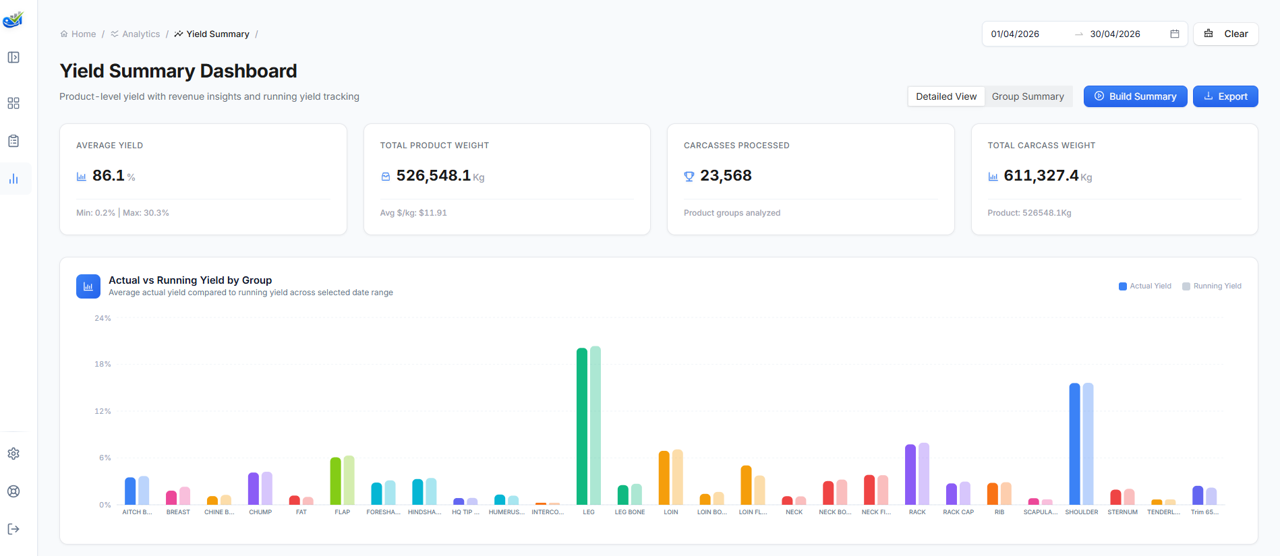
出成率汇总看板可对比实际出成率与动态累计出成表现,助力加工企业挖掘胴体价值。
迈向新阶段
韦恩介绍,该平台最初为羔羊与羊肉加工业务开发,但在设计阶段就预留了拓展至牛肉加工领域的空间。
“我们搭建的是一套可随行业需求持续迭代的框架体系,”他表示。
“令人振奋的是,当前我们已使用真实商业数据开展工作,不再依赖估算值。”
随着更多加工企业接入使用,平台性能将持续优化,能够更加精准地呈现红肉行业的价值产生环节。
消息来源:MLA
Turning carcase data into better livestock decisions
A new decision-supporting platform known as Meat Logic has been developed with the support of Adelaide University – combining production planning, profitability analysis, carcase performance information and traceability tools into a single system.
Building on MLA’s ALMTech projects (ALMTech I and ALMtech II) – which have focused for almost a decade on advancing objective measurement technologies that give processors a better understanding of carcase lean meat yield, eating quality and value – the platform aims to improve how objective measurement data is stored, analysed and utilised to inform decision-making.
Cutting the fat
Professor Wayne Pitchford, from Adelaide University’s School of Animal and Veterinary Sciences, said that the development of Meat Logic initially began when they were asked to help lamb and sheepmeat processors understand the costs of excess fat in their systems.
“Producers invest a lot of resources into feeding animals to meet market specifications,” he said.
“But if animals are carrying excess fat, processors then have to invest additional labour and resources to remove it.”
While that fat is trimmed to maximise the value of the cut, accurately determining fat depth manually can be difficult, creating the risk of either too much or too little being removed.
For processors, the challenge was therefore not only accessing objective measurement technologies, but finding a way to better use the data they generate to inform processing decisions and provide meaningful feedback to producers.
Meat Logic was developed to bridge that gap, bringing objective measurement data and information that can otherwise sit across an array of spreadsheets into a single, dashboard-driven platform.
Meat Logic is designed to serve as a one stop shop - consolidating and analysing objective measurement data to give processors key decision-making insights.
Bridging the gap
As the platform moved from concept to development, the Adelaide University contracted Dale Flanigan, a commercial boning room manager with a long career in red meat processing.
Dale brought experience spanning the slaughter floor to the boardroom and played a key role in developing the coding behind Meat Logic.
That practical processing experience helped shape the logic and integration needed to bring information into a single user interface – replacing multiple spreadsheets and giving processors one place to manage and interrogate information across the supply chain.
According to Adelaide University Researcher and Innovation Broker, Dr Sean Miller, the platform works by linking carcase data from the suite of objective measurement devices within a processing plant into a single location.
The platform then analyses the data to create a reporting on:
carcase yield and eating quality
carcase weight
production efficiency
labour utilisation
processing profitability
carcase-to-carton tracking.
This includes a web-based production planning dashboard, protected by the same cybersecurity systems used to store human medical records, which brings operational information together in a single view. The platform can also calculate revenue captured across carcases.
Sean said the platform's ability to connect and analyse multiple datasets has already demonstrated significant potential through optimisation work that examined how different groups of carcases could be sorted to increase profit.
“Through analysing inventory from across a four-day period at one of our processor trial sites, Meat Logic was able to help them determine a way to allocate carcases to an ideal boning room cutting plan.”
“Then, through that simple introduction of a specified carcase sortation strategy and improved efficiency, they were able to gain an additional profit of $1.50-$2.00 per head.”
“In the long term, the hope is that the greater value extracted from carcases will then enable the development of a reverse engineered price grid – delivering a fairer and more transparent payment system for producers.”
Delivering value on-farm
In alignment with MLA’s Strategic Plan 2030’s bold ambition of delivering value-based marketing, the platform’s analysis of objective measurement data will also be utilised by processors to provide carcase feedback to producers.
“Helping producers breed, feed and finish livestock with the end market in mind is critical to the long-term productivity and profitability of the industry across the supply chain,” Sean said.
“By translating objective measurement data into meaningful carcase feedback, Meat Logic creates an opportunity for producers to gain a clearer understanding of the traits that are driving value within processing systems and premium markets.”
“Rather than receiving feedback focused solely on weight and fat score, future applications of the platform could enable producers to better understand how characteristics such as lean meat yield, eating quality and carcase composition contribute to overall carcase value.”
“This information can then be used to support both day-to-day management decisions and longer-term genetic improvement strategies,” he said.
“The addition of a clear payment system will also offer further signals producers that guide them of which characteristics to target for that premium price.”
The Yield Summary Dashboard compares actual and running yield performance, providing processors with insights to maximise carcase value.
Taking the next steps
While initially developed for lamb and sheepmeat processing, Wayne said the platform has been designed with future expansion into beef processing in mind.
“What we've built is a framework that can continue to evolve alongside industry needs,” he said.
“The exciting part is that we're now working with actual commercial data rather than estimates.”
“And as more processors come on board, the platform will continue to improve and provide an increasingly accurate picture of where value is being created within our red meat industry.”
Source:MLA

