

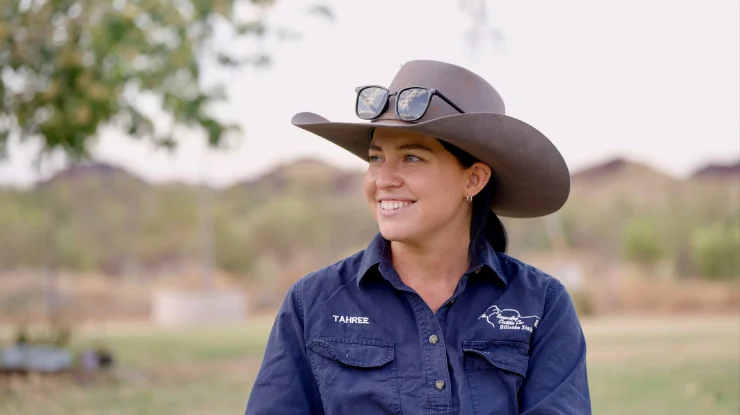
皮尔巴拉养殖户 塔赫里・卡曼
图片来源:保罗・贝尔 — 野性影像工作室
实时数据揭示了西澳大利亚州皮尔巴拉地区一处大型肉牛牧场的犊牛早期生长规律。
希尔斯赛德牧场位于马布尔巴以东,占地65万公顷,土壤以红砂黏土、壤质砂土为主,植被遍布三齿稃、布菲耳草,还有常年河川滩地。
此地气候环境极端,气温常飙升至45摄氏度左右,年均降雨量300至350毫米,且几乎全部集中在雨季,因此把控时机与科学决策尤为关键。
农场概况
负责人:塔赫里·卡曼(管理团队)——西澳皮尔巴拉地区马布尔巴镇,希尔斯赛德牧场
占地面积:650000公顷
养殖规模:20000头耐旱大师肉牛,其中基础母牛10000头
草场植被:三齿稃、布菲耳草、多年生草本植物
土壤类型:红砂黏土、红壤质砂土
年均降雨量:300–350毫米
断奶饲养重点
希尔斯赛德牧场隶属于布伦特·斯穆西旗下斯穆西肉牛公司。其职能是待断奶牛犊达到可运输体重后,从皮尔巴拉转运至昆士兰州。若错过该窗口期,牛犊便需留场度过雨季,既加重草场负荷、增加饲喂成本,也会提高人工需求。希尔斯赛德牧场是由皮尔巴拉推广网络牵头、皮尔巴拉创新合作组织统筹,参与养殖户自主研究的牧场之一。
牧场管理团队成员塔赫里·卡曼发起了这项研究项目,旨在探究干草品质与矿物质补饲对犊牛早期生长速率的影响,以此掌握瘤胃发育规律及转场放牧后的生长适应表现。
试验共纳入7群、总计290头断奶犊牛,初始体重区间90–145公斤,平均体重128–136公斤。所有犊牛被划分至四个试验处理组之一:
特级罗兹草(高品质)+多维矿物补饲
特级罗兹草(高品质)无矿物补饲
二级罗兹草(普通品质)+多维矿物补饲
二级罗兹草(普通品质)无矿物补饲
所有断奶犊牛均接受五联疫苗接种,并饲喂米尔恩早期断奶颗粒饲料。
经过7–10天的圈舍断奶后,各牛群转入牧场放牧45–60天,分别在入栏时、8月5日及8月23日,通过奥普维智能称重设备记录活体体重。
为保证数据对比严谨性,提前转运至昆士兰州的牛只不纳入统计分析。
饲料品质的重要性
所有牛群试验得出一致结论:决定生长表现的核心是饲料品质,而非矿物质补给水平。
饲喂优质罗兹干草的犊牛,无论是圈舍饲养阶段,还是转入牧场放牧后,日均增重都更为稳定可靠。
相比之下,二级罗兹干草在圈舍断奶阶段尚能维持尚可增重,但转入牧场后生长势头明显乏力。
这表明:犊牛早期瘤胃发育与饲料消化率的影响,远大于单次矿物质补饲。
矿物质补饲仅偶尔带来短期增益,在各试验组间并未表现出显著、稳定的效果。试验证明,在当地养殖环境中,矿物质供给并非主要限制因素,饲料品质与瘤胃发育成熟度才是关键。
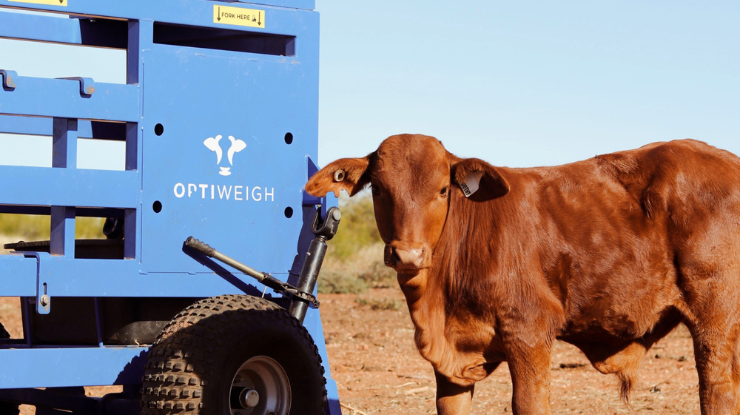
希尔斯赛德牧场佩戴奥普维称重设备的断奶犊牛
图片来源:塔赫里・卡曼
农业科技赋能养殖决策
圈舍内采用 Sapien 数据管理技术,牧场中布设 Optiweigh 实时称重设备,彻底改变了希尔斯赛德牧场的决策模式。
牧场不再依靠肉眼估重或集结后统一称重,Optiweigh 设备可实时监测牛只体重平稳度、增重及掉重情况。
这让塔赫里能够精准甄别已达运输标准的牛只、生长停滞的个体,并及时判断干预时机,避免轻微体重损耗演变为大幅掉膘。
数据还清晰反映出发育成熟度不同的断奶犊牛,在行为生长上存在明显差异。
体重更大、瘤胃发育更完善(130公斤以上)的犊牛,日均增重表现始终更强劲稳定,饲喂优质干草且不额外添加矿物补饲时效果尤为突出,部分个体牧场放牧阶段日增重最高可达1.52公斤。
反观体重偏轻、瘤胃尚未发育成熟的犊牛,体重波动幅度更大,部分小幅增重、部分生长停滞,还有个体出现掉重情况。这表明,相比初始体重,瘤胃发育成熟度更能预判犊牛长期生长潜力。
经验总结
塔赫里表示,本次项目得出的一项核心实操经验是:试验处理管理必须保持严格统一。
她说道:“合理分群、精准圈舍分配,以及保障干草、颗粒饲料与饮水持续不间断供应,才能让试验数据更具参考价值。”
同时也进一步印证了时机把控的重要性:在肉牛集中出栏与转运窗口期之间开展试验,需要周密规划、灵活应变,并坚守不可妥协的执行标准。
展望未来
本试验虽非以测算投资回报效益为目的,但其价值在于积累养殖认知,为下一季生产决策提供依据,也为后续多季的科研优化奠定基础。
试验证实,不同断奶犊牛的生长反应存在个体差异;机体发育成熟度是决定生长表现的核心因素,而干草品质则直接影响犊牛从圈舍转入牧场过渡期的持续增重水平。
展望后续,希尔斯赛德牧场管理团队计划在现有首期研究基础上进一步拓展试验范围。
后续重点方向包括:追踪不同干草饲喂处理的犊牛转运至昆士兰州后的长期生长表现、探索助力低体重犊牛瘤胃发育的优化方案,以及评估维生素 B12 等定向补饲产品的应用效果。
牧场整体生产运营中将持续沿用奥普维实时称重设备及配套数据采集体系。
塔赫里表示:“我的目标并非追求完美试验数据,而是摸清在本地环境、自有牛群条件下,真正决定生长性能的关键因素。”
“如今我们已经拥有科研探索的起点,未来数年可在此基础上持续深耕。”
“2026 年,我们将继续开展不同断奶饲养方案试验、持续收集数据、研究瘤胃发育规律,力求提升日均增重,依托实证数据为断奶犊牛制定最优养殖管理决策。”
本次试验充分印证:养殖户的探索精神,结合实时数据支撑与实用技术工具,能够推动品种选育、营养饲喂及牧场管理全方位优化。专业认知助力科学决策,而在希尔斯赛德牧场,这类养殖决策正变得愈发清晰笃定。
养殖户引领变革 —— 皮尔巴拉创新合作组织
西澳大利亚州皮尔巴拉地区一项为期 18 个月的试点项目,充分印证了由养殖户主导研发创新所能实现的价值。
由皮尔巴拉创新合作组织(PIP) 牵头落地的皮尔巴拉推广网络(PEN),为七家农牧牧场提供支持,助力其自主设计、开展并评估贴合自身经营需求的研究项目。
每家牧场推选一名项目负责人,围绕自身生产经营中的实际难题定制研究课题,所得研究成果也能长期为澳洲北部肉牛产业提供参考借鉴。研究主题涵盖放牧策略、品种选育、土地修复、人力建设及数据化应用等领域。
皮尔巴拉创新合作组织、资助合作方(西澳初级产业与区域发展部、澳大利亚肉类与畜牧业协会、力拓集团)与广大养殖户携手合作,确保资金投入聚焦当地实际刚需,整合人力、技术与领导力资源,同步改善生态环境,提升产业长期生产能力。
希尔斯赛德牧场正是该创新项目的参与单位之一。
消息来源:MLA
Good feed early makes better weaners
Pilbara producer Tahree Kamman Image: Paul Bell – Feral Films
Real-time data has shed light on early growth patterns on a vast Pilbara, WA, cattle station.
Located east of Marble Bar, ‘Hillside Station’ spans 650,000 hectares of red sandy clay, loamy sands, spinifex, buffel grass and perennial river flats.
It’s a landscape known for extremes. With temperatures regularly reaching mid-40s and rainfall of about 300–350mm falling almost entirely during the wet season, timing and decision making are crucial.
FARM SNAPSHOT
Name: Tahree Kammann (Managerial Team) – ‘Hillside Station’, Marble Bar, Pilbara, WA
Area: 650,000ha
Enterprise: 20,000 Droughtmaster cattle, including 10,000 breeders
Pastures: Spinifex, buffel grass, perennials
Soils: Red sandy clay, red loamy sands
Rainfall: 300–350mm
Weaning focus
Hillside is one holding within Brent Smoothy’s Smoothy Cattle Co enterprise. Its role is to allow weaners to move from the Pilbara to Queensland once they reach trucking weight. If they miss that window, they stay through the wet, adding pressure on pasture, increasing feed costs and raising labour needs. Hillside is one of the stations involved in producer-led research through the Pilbara Extension Network, facilitated by the Pilbara Innovation Partnership.
One of Hillside’s managerial team, Tahree Kammann, launched the project to explore how hay quality and mineral supplementation influence early growth rates to gain insight into rumen development and transition-to-paddock performance.
Seven mobs of weaners (290 head) joined the trial at 90–145kg (average 128–136kg). They were allocated to one of four treatment groups:
Super grade Rhodes (high) with Multimin
Super grade Rhodes without Multimin
P2 Rhodes (low) with Multimin
P2 Rhodes without Multimin.
All weaners received Ultravac 5in1 and Milne Early Weaner pellets.
After 7–10 days of yard weaning, mobs grazed in paddocks for 45–60 days, with liveweight recorded using Optiweigh units at induction, on 5 August and 23 August.
Animals sent to Queensland early were excluded from the data to ensure consistent comparisons.
Importance of feed quality
The most consistent finding across all mobs was that feed quality – not mineral status – drove sustained performance.
High quality Rhodes hay supported more reliable average daily gains (ADGs) both in yards and after weaners transitioned to paddock grazing.
In contrast, P2 Rhodes hay delivered decent gains during yard weaning but struggled to maintain momentum in paddock conditions.
This showed that early rumen development and feed digestibility were more influential than single-dose mineral supplementation.
Mineral supplements showed occasional short-term benefits but did not produce a strong or consistent effect across treatment groups. The evidence suggested that mineral availability was not the main limiting factor in this environment; feed quality and rumen maturity were.
A weaner with an Optiweigh unit at ‘Hillside’. Image: Tahree Kammann
Ag-tech shapes decisions
Sapien data-management technology in the yards and Optiweigh real-time weighing in the paddock changed the way decisions were made at Hillside Station.
Instead of relying on visual estimates or post-muster weigh-ins, the Optiweigh units provided live insight into weight stability, gains or declines.
This enabled Tahree to identify which animals were ready to truck, which were stalling and when intervention might be needed. It helped prevent minor losses from turning into significant declines.
The data also revealed a clear behavioural difference between mature and less-mature weaners.
Heavier, more rumen-developed animals (130kg+) consistently achieved stronger, more reliable ADGs, especially on high quality hay without Multimin. Some of these animals recorded paddock gains of up to 1.52kg/day.
Conversely, lighter, less rumen-developed weaners showed more volatile weight trends. Some gained modestly, some stalled and others lost weight. This indicated that rumen maturity was a better predictor of long-term growth potential than starting weight.
Lessons learned
Tahree said one of the key operational lessons from the project was that maintaining strict consistency in treatment management was essential.
“Correct drafting, accurate pen allocation and ensuring uninterrupted access to hay, pellets and water made the data more meaningful,” she said.
“The importance of timing was reinforced – running a trial between mustering and trucking windows requires careful planning, adaptability and clear non-negotiables.”
Informing the future
While this trial wasn’t designed to generate financial return on investment data, its value lies in building knowledge to better inform decision making next season and scientific refinement in the seasons ahead.
It confirmed that not all weaners respond equally, identified that readiness is the key driver of performance and that hay quality drives sustained weight gain during the transition from yards to paddock.
Looking forward, Hillside’s managerial team plans to expand on this initial phase.
Priorities include tracking how hay treatment affects longer-term weaner performance once they arrive in Queensland, exploring ways to better support lighter weaners in rumen development and evaluating targeted supplements like B12.
The Optiweigh unit and data collection will continue to be utilised across the entire operation.
“My goal wasn’t to chase perfect results – it was to understand what drives performance here, in our environment, with our cattle,” Tahree said.
“Now we’ve got a starting point we can build on scientifically over the coming years.
“In 2026, we’ll continue trialling different weaning protocols, collecting data and exploring rumen development to lift ADGs, so we can keep making the best, evidence-based decisions for our weaners.”
This trial shows how producer curiosity, backed by real-time insights and practical tools, can lead to improvements in genetics, nutrition and management. Knowledge fosters better decisions – and at Hillside, those decisions are becoming clearer.
Producers leading change – Pilbara Innovation Partnership
An 18-month pilot in the Pilbara, WA, is proving what’s possible when producers lead the way in research and development.
The Pilbara Extension Network (PEN), delivered through the Pilbara Innovation Partnership (PIP), supports seven pastoral stations to design, deliver and evaluate projects that matter to their business.
Each station nominates a project lead who shapes a project around a challenge specific to their operation, which can generate insights to benefit the northern beef industry in the long-term. Topics span grazing strategies, genetics, land rehabilitation, workforce development and data use.
The collaboration between PIP, funding partners WA Department of Primary Industries and Regional Development, MLA, Rio Tinto, and producers ensures investment flows into locally identified priorities, aligning people, skills and leadership with improved landscape conditions and long-term productive capacity.
Hillside Station is one of the businesses involved in the initiative.
Source:MLA

