

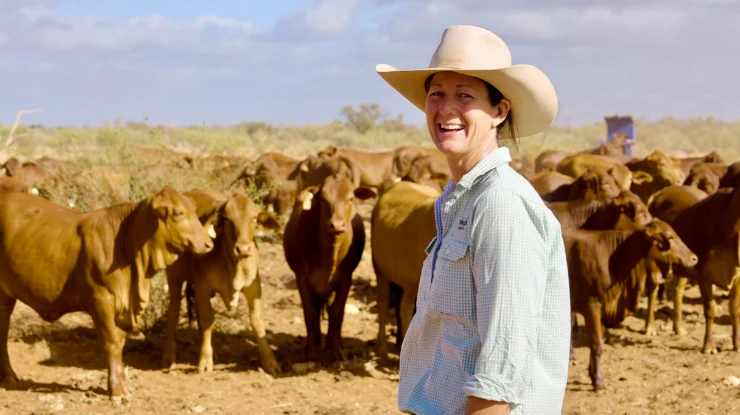
莎伦·汤普森(图中)与丈夫克林特共同经营怀洛牧场
管控放牧强度是西澳西皮尔巴拉地区牧场经营的关键举措,下文介绍一处牧场借助该方式优化繁育牛群状态与草场长势的实操经验。
依托皮尔巴拉推广服务网络,阿什伯顿河流域怀洛牧场团队正推行休牧放牧体系,优化青年母牛与二胎母牛饲养管理,同时保障草场供给充足、改善土地生态。
休牧放牧核心是预留草场休养恢复期。
不再让牛群长期滞留同一草场,适时转群放牧,让牧草得以再生、积蓄根系养分并完成结籽,再进行新一轮采食。
这类草原生态区植被遇雨长势迅猛,但若长期过度放牧便会快速退化,草场休养周期对维系草场状态与地表植被覆盖率至关重要。
牧场概况
牧场主:莎伦·汤普森,牧场名怀洛牧场,地处西澳西皮尔巴拉阿什伯顿河流域
占地面积:20万公顷
养殖品类:耐旱大师肉牛
草场植被:本土多年生草本植物、三齿稃草场
土壤类型:开阔平原、岩质丘陵、河流冲积平地
年均降雨量:280毫米,降水波动极大
怀洛牧场的实操模式
怀洛牧场正在测试的放牧体系,核心是一套五分区轮牧结构:牛群按既定计划在各草场间轮牧,同时为草场设定明确的休牧恢复期。
该项目依托皮尔巴拉推广服务网络(PEN)提供的 6 万澳元预算落地实施。
选址规划:项目第一阶段,先完成系统适配区域的勘察与筛选;确定区域后,随即启动配套基础设施建设。
围栏改造:搭建战略围栏,划分出五个独立草场;同时升级多个饮水点,保障供水充足,让牛群在各草场间采食分布更均匀。
监测技术:依托加斯科因 - 皮尔巴拉草原项目的草原监测工具,设立监测点,长期跟踪草场状况与土地健康指标;安装 Optiweigh 称重设备,实时获取牲畜生长性能数据。
控配繁育 优化畜群品质
该养殖模式的重要一环,是对不同类别牛群实行定向控配,青年母牛为重点管控对象。
将青年母牛单独分群饲养,方便牧场管理人员随季节变化制定科学养殖方案。
首批 210 头青年母牛于 2025 年 3 月纳入该养殖体系,平均体重 390 公斤。牧场投放 7 头种公牛,开展为期六十天的配种工作。
科学监测 精细管控
追踪牛群对放牧模式的适应情况,是该项目的另一重要环节。
怀洛牧场引入野外便携称重设备奥普威,借助诱食装置引导牛只自主进入设备,自动完成体重数据采集。
该设备无需将牛只赶回圈舍,即可实时掌握牲畜生长状况。
此项技术并非单独使用,而是作为养殖决策的辅助手段。工作人员结合活体体重数据、草场实地巡查及植被监测结果,研判牛群长势与草料供给的适配情况,同时掌握草场在放牧与休牧循环中的长势变化。
循环轮牧有序推行
青年母牛群纳入养殖体系后,按次序在五大草场依次轮牧。
转场安排结合草场实地巡查、牧草监测数据及称重设备数据综合判定。
依托实地观察与体重数据,牧场团队可评估该放牧模式对牲畜生长及草场恢复的实际成效。
必要时可调配或售出经孕检确认未受孕的青年母牛,调整草场载畜量,让放牧强度与草料供给保持平衡。
依托数据 科学决策
该项目还可收集整个牛群更为详尽的繁育性能数据。
依托集中配种周期与清晰分群管理,牧场团队能够筛选出繁育表现不佳的个体,精准筛选留种母牛,做出合理养殖规划。
可供借鉴的实践经验
该区域降雨、牧草长势与肉牛生长状况随季节波动极大,能让牲畜与草场同步适配环境变化的养殖管理模式愈发重要。
怀洛牧场开展的相关实践,为皮尔巴拉地区放牧体系优化积累实用经验,助力打造高产且生态稳固的草原牧场。
项目融合休牧放牧、定向配种、设施建设与长势监测多种方式,探索协同管理方案,优化青年母牛与二胎母牛饲养管理,同步推动草场生态恢复。
此项皮尔巴拉推广网络项目也为后续研究奠定基础,牧场现已联合凯尔西・普尔博士启动新项目,研究热应激对肉牛健康、生产性能及繁育能力造成的影响。
经验总结
草原监测工具可简化生态管理相关的数据收集与对比工作。
从单块场地或单一牛只年龄段着手开展场内实操,便能解决无从下手的难题。
遭遇气候恶劣的时节,此类管理体系能提供更多调控办法。我们可掌握犊牛产犊时间,明确无法受孕产犊的牛只,也能确定合适的集中收拢与处置时机。
养殖户引领行业变革
西澳皮尔巴拉地区一项为期十八个月的试点项目证实,由养殖户主导研发工作能够发掘巨大发展潜力。
由皮尔巴拉创新合作组织推行的皮尔巴拉推广服务网络项目,扶持七家牧场自主设计、实施并评估贴合自身经营需求的项目。
每家牧场指定一名项目负责人,围绕自身经营难题制定项目方案,所积累的实践经验长远来看将惠及北方肉牛产业。
怀洛牧场便是该计划的参与主体之一。
皮尔巴拉推广服务网络二期项目现已启动,意向申报工作已完成,目前正开展参选主体审核工作。
皮尔巴拉创新合作组织联合西澳初级产业与地区发展部、澳大利亚肉类与畜牧业协会、力拓集团等出资方及广大养殖户通力合作,将资金投入当地实际发展需求,凝聚人力、技术与管理力量,改善土地生态环境,稳固产业长期生产能力。
消息来源:MLA
Rest-based grazing lifts herd and pasture performance
Shanon Thompson (pictured) and her husband Clint own and manage 'Wyloo Station'.
Managing grazing pressure is an essential part of pastoral businesses across the west Pilbara region of WA – here’s how it’s being used on one station to improve breeder and pasture performance.
Through the Pilbara Extension Network (PEN), the team at ‘Wyloo Station’ in the Ashburton River region is exploring how a rest-based grazing system can improve the management of heifers and second calvers while ensuring optimal pasture availability and improved land condition.
Rest-based grazing systems centre on allowing the country time to recover between grazing events.
Instead of cattle remaining in the same paddock for extended periods, livestock are moved so plants can regrow, rebuild root reserves and set seed before being grazed again.
In rangeland environments where vegetation can respond quickly to rainfall but decline rapidly under sustained grazing pressure, these recovery periods play an important role in maintaining pasture condition and ground cover across the landscape.
FARM SNAPSHOT
Name: Shanon Thompson – “Wyloo Station”, Ashburton River region (west Pilbara), WA
Area: 200,000ha
Enterprise: Droughtmaster cattle
Pastures: Native perennial grasses and spinifex systems
Soils: Open plains, rocky ridges, alluvial river flats
Rainfall: 280mm (highly variable)
How it works at Wyloo
The system being tested at Wyloo centres around a five-paddock grazing structure designed to move cattle through paddocks in a planned sequence while providing defined rest periods for pasture recovery.
This project was implemented within the $60,000 budget allocated through PEN.
Location: The first stage of the project involved identifying and surveying the areas considered most suitable for the system. Once these areas were selected, infrastructure work began to support the grazing design.
Fencing: Strategic fencing was installed to create the five paddocks. Several water points were upgraded to ensure adequate water supply and enable cattle to utilise paddocks more evenly across the system.
Technology: Monitoring sites were established using the Gascoyne Pilbara Rangelands Initiative Rangelands Monitoring Tool to track pasture condition and land health indicators over time. An Optiweigh unit was also installed to provide real-time information on animal performance.
Controlled mating strengthens herd
A key component of the system is the continuation of controlled mating for specific classes of cattle, particularly heifers.
Managing these heifers separately allows Wyloo’s management team to make strategic decisions as the season progresses.
The first cohort of 210 heifers was inducted into the system in March 2025. They weighed an average of 390kg. Seven bulls were joined to the heifer group for a 60-day mating period.
Monitoring to manage
Monitoring how cattle respond to the grazing system is another important component of the project.
Wyloo Station is incorporating Optiweigh technology – a fully portable weigh system used in the paddock. Animals are enticed into the unit using an attractant which allows cattle weights to be recorded automatically.
Optiweigh data provides real-time information on animal performance, without the need for animals to be yarded.
Importantly, the technology is not being used in isolation, but as one tool to help make management decisions. Animal liveweight data is cross-referenced with paddock observations and pasture monitoring to understand how cattle performance is responding to pasture availability across the system, as well as how the pasture itself is responding to grazing and rest.
Round she goes
Once inducted into the system, the mob of heifers move through the five paddocks in sequence.
Movement decisions are based on a combination of paddock observations, pasture monitoring data and Optiweigh information.
This combination of observations and weight data allows the station team to assess how well the grazing system is supporting both animal performance and pasture recovery.
Where necessary, carrying capacity can be adjusted by shifting or selling preg-tested empty (PTE) heifers to ensure grazing pressure remains appropriate for the available feed.
Building data into decisions
Another aspect of the project is the opportunity to collect more detailed reproductive performance data across the herd.
With tighter mating periods and clearly defined cohorts, the station team can identify animals which may not be performing as well reproductively and make more informed decisions about which females remain within the breeding herd.
Practical insights for others
In a region where rainfall, pasture growth and cattle performance can vary widely from season to season, management systems that allow both livestock and country to respond to these conditions are increasingly important.
The work underway at Wyloo Station is helping build practical knowledge around how grazing systems in the Pilbara might continue to evolve while maintaining productive and resilient rangelands.
By combining rest-based grazing, controlled mating, infrastructure development and performance monitoring, the project is exploring how these tools can work together to improve the management of heifers and second calvers while supporting pasture recovery.
This PEN project has also opened pathways to further research, with a new project underway at Wyloo in conjunction with Dr Kelsey Pool that investigates the impacts of heat stress on cattle health, productivity and reproductive performance.
Lessons learned
The Rangelands Monitoring Tool makes data collection and comparison simple where ecosystem management is concerned.
Starting with one area of land, or one age group, on-station removes the ‘where do I start’ question.
When poor seasons arise, utilising a system like this provides more levers to pull. We know when calves will drop. We know which ones won’t calve. We know when we can muster or handle them.
Producers leading change
An 18-month pilot in the Pilbara, WA, is proving what’s possible when producers lead the way in research and development.
The Pilbara Extension Network (PEN), delivered through the Pilbara Innovation Partnership (PIP), supports seven pastoral stations to design, deliver and evaluate projects that matter to their business.
Each station nominates a project lead who shapes a project around a challenge specific to their operation, which can generate insights to benefit the northern beef industry in the long-term.
Wyloo Station is one of the businesses involved in the initiative.
Round Two of PEN has begun, with expressions of interest submitted and candidate vetting now underway.
The collaboration between PIP, funding partners WA Department of Primary Industries and Regional Development, MLA, Rio Tinto and producers ensures investment flows into locally identified priorities, aligning people, skills and leadership with improved landscape conditions and long-term productive capacity.
Source:MLA

