

核心要点
全国肉牛养殖户信心指数维持在 53,整体向好。
多个南部州信心指数上行,南澳州与维多利亚州净信心指数达 66,位居前列。
养殖户扩群意愿分化,26% 计划增栏,21% 打算减栏,54% 选择维持现有存栏规模。
澳大利亚肉类及畜牧业协会本周发布 2026 年 4 月牛肉生产意向调查报告,本次调研共有 3000 余名肉牛养殖户参与。结果显示养殖户信心整体向好,六成从业者对未来 12 个月肉牛行业前景持乐观态度。
全国净信心指数维持在 53,与 2025 年 4 月持平。各主产州信心指数则出现明显分化。
北部地区养殖户信心指数从 65 降至 52,与南部地区基本持平;南部地区信心指数由 52 微升至 53,当地养殖户对来年行情的乐观情绪较去年有所提升。
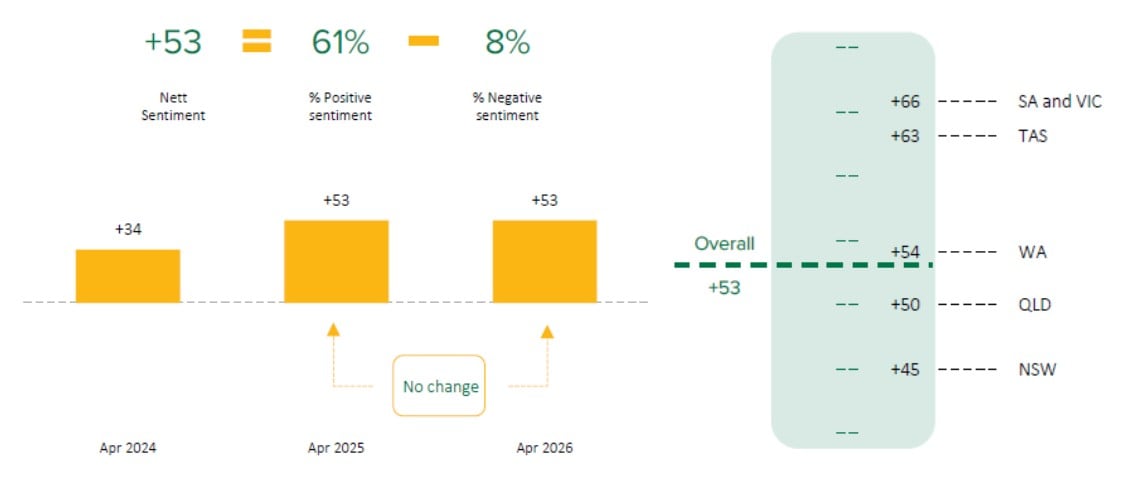
各州信心指数
南澳大利亚州与维多利亚州信心指数最高,均为 66。两地行情较去年出现明显反转,去年其信心指数处于全国低位。西澳大利亚州、塔斯马尼亚州同比大幅提升,指数分别达 54、63,涨幅依次为 40 点、26 点。
相较于半年前,价格上涨仍是养殖户信心提升的首要原因。而降水增多、气候转好、饲草充足等因素影响力上升,同样成为提振信心的主要动力。
上述因素在南澳州和维多利亚州体现尤为明显,当地养殖户多将气候与饲草条件改善列为信心增长缘由。这意味着当地情况逐步好转,连续两年降水偏少的困境得到一定缓解。
反观情绪悲观的养殖户,燃油价格走高与供应短缺是首要顾虑,地缘政治动荡次之。
新南威尔士州与昆士兰州整体信心指数下滑。新南威尔士州下降 13 点至 45,低于全国均值。调研期间,该州新英格兰等多地长期降水不足。干旱是当地养殖户看淡行业的主因,同时也是昆士兰州南部养殖户情绪走低的第二大影响因素。
昆士兰州北部养殖户的信心主要受燃油成本、中东局势及养殖成本压制。本次调研恰逢霍尔木兹海峡航运受阻事件发生后不久,该事件受到广泛关注,市场也随之做出反应。
存栏发展意向折射各地市场情绪
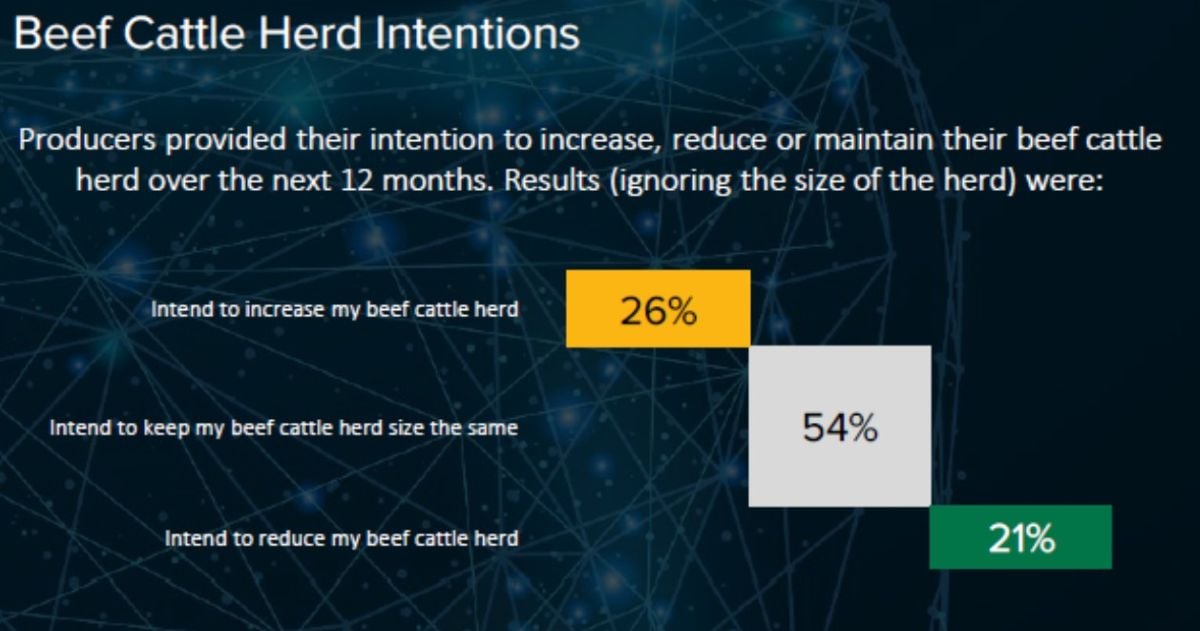
养殖户信心会影响其未来存栏规划。全国范围内,26%的养殖户计划扩大肉牛存栏,21%打算缩减规模,54%选择维持现有存栏不变。
存栏规划同样存在地区差异。南澳大利亚州、维多利亚州及塔斯马尼亚州约三分之一养殖户计划扩群,仅15%打算减少存栏。
新南威尔士州选择减栏的养殖户占比更高,31%计划缩减存栏,22%有意扩群。昆士兰州养殖户态度介于两者之间,尽管持续担忧养殖成本,仍有24%计划扩群,19%准备减栏。
如需了解更多详情,可查阅完整的牛肉生产意向调查报告。
内容来源:澳大利亚肉类及畜牧业协会高级市场信息分析师 埃米利亚诺·迪亚兹
数据截至2026年5月29日发布之时。
澳大利亚肉类及畜牧业协会(MLA)不对本刊物所载任何信息的准确性、完整性及时效性作出任何保证。用户使用或依赖本刊物任何内容,风险自行承担;因使用或依赖相关信息所造成的任何损失与损害,MLA概不承担任何责任。未经MLA事先书面许可,本刊物任何内容不得擅自转载、复制。凡使用MLA刊物、报告及相关信息,均须遵守MLA市场报告及信息使用条款。
消息来源:MLA
Most cattle producers optimistic about the next year
Key points
National cattle producer sentiment remained strong at +53.
Sentiment lifted in several southern states, with SA and Victoria recording the highest net sentiment at +66.
Herd intentions remain mixed, with 26% of producers looking to increase cattle numbers, 21% planning to reduce and 54% intending to hold steady.
MLA’s April 2026 Beef Production Intention Survey results were released this week, with more than 3,000 cattle producers contributing to the latest survey. The results show producer sentiment remains strong, with 6 in 10 producers optimistic about the cattle sector over the next 12 months.
National net sentiment remained steady at +53, unchanged from the April 2025 survey. However, state-level results show clear shifts in confidence across key cattle-producing regions.
Sentiment among northern producers eased from +65 to +52, bringing it broadly in line with southern producers, where sentiment lifted slightly from +52 to +53. This indicates southern producers are feeling more positive about the year ahead than they were 12 months ago.
Sentiment by state
The strongest sentiment results were recorded in SA and Victoria, both at +66. This marks a notable turnaround from a year ago, when these states were among those with the lowest sentiment scores. WA (+54) and Tasmania (+63) also recorded strong year-on-year improvements, lifting 40 and 26 points respectively.
For producers who reported feeling more positive than six months ago, improved prices remained the leading driver. However, rainfall, stronger seasonal conditions and feed availability have moved higher in the rankings and are now among the main factors supporting improved sentiment.
These factors were particularly important in SA and Victoria, where producers were more likely to cite seasonal conditions and feed availability as reasons for increased confidence. This suggests conditions in these states have started to improve, providing some relief after two years of below-average rainfall.
On the other side, producers who reported feeling more negative about the industry identified fuel prices and shortages as the top factor, followed by geopolitical instability.
NSW and Queensland recorded an overall decline in sentiment. NSW fell 13 points to +45, placing it below the national average. The survey was conducted while parts of the state were experiencing a prolonged period of below-average rainfall, including the New England region and surrounding areas. For NSW producers who became more negative about the sector, dry conditions were the leading factor. Dry conditions were also the second-ranked influence for southern Queensland producers.
For northern Queensland producers, fuel, the war in the Middle East and production costs were the main factors weighing on confidence. It’s important to note that the survey was conducted shortly after the Hormuz Straits blockage, with strong media and public attention and markets reacting to possible outcomes.
Herd future intentions reflecting regional sentiment
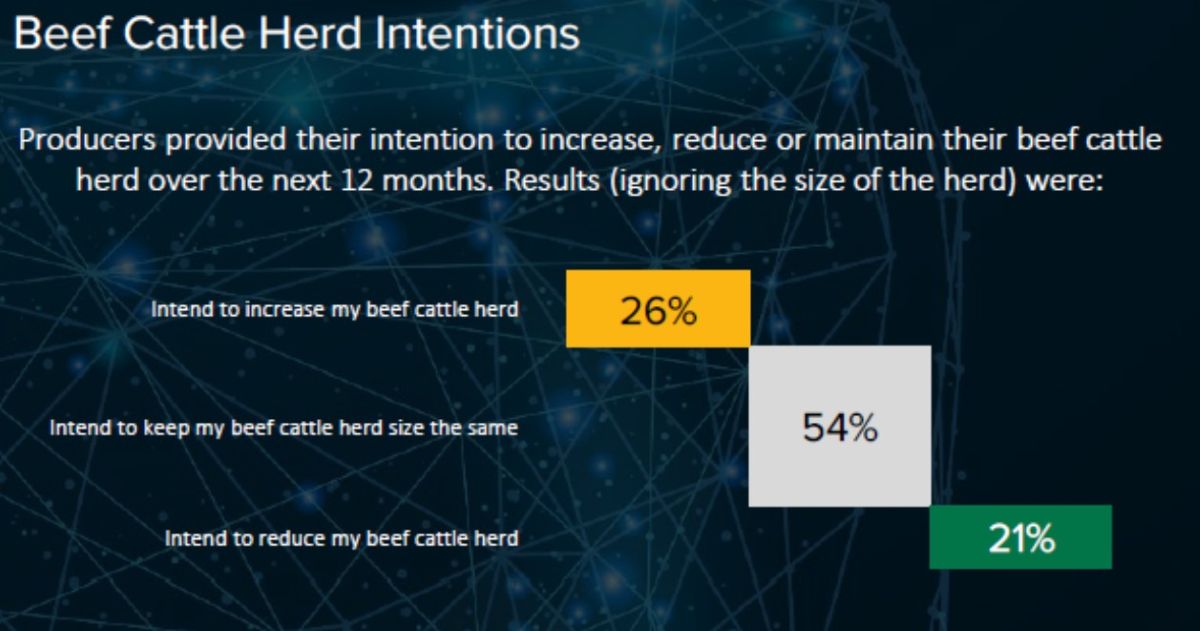
Producer sentiment influences producers’ future herd intentions. Nationally, 26% of producers intend to increase their cattle herd, while 21% plan to reduce numbers and 54% intend to keep their herd steady.
As with sentiment, herd intentions vary by state. Around one-third of producers in SA, Victoria and Tasmania intend to increase herd size, while only 15% intend to reduce numbers in those states.
In NSW, more producers are looking to reduce their herd, with 31% planning to downsize and 22% intending to increase numbers. Queensland producers sit between these two groups, with 24% looking to increase herd size and 19% planning to decrease, despite ongoing concerns around input costs.
Get these insights and more in the full Beef Production Intention Survey.
Attribute content to: Emiliano Diaz, MLA Senior Market Information Analyst.
Information is correct at time of publication on 29 May 2026.
MLA makes no representations as to the accuracy, completeness or currency of any information contained in this publication. Your use of, or reliance on, any content is entirely at your own risk and MLA accepts no liability for any losses or damages incurred by you as a result of that use or reliance. No part of this publication may be reproduced without the prior written consent of MLA. All use of MLA publications, reports and information is subject to MLA’s Market Report and Information Terms of Use.
Source:MLA

