

核心要点
主产肉牛区域十月降雨搅动市场行情。
全国肉牛上栏量9月至10月环比下跌22.6%,创下二十年来同期最大跌幅。
随着加工厂牛源供给趋紧,部分加工厂缩减班次。
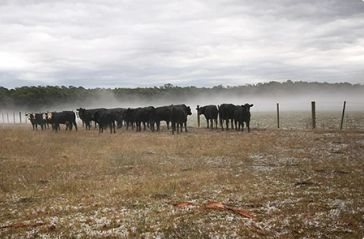
肉牛主产区十月普降大雨,对肉牛市场造成深远影响,波及上栏量、行情以及加工厂屠宰产能。
十月降雨量
澳大利亚气象局此前预报澳大利亚东部整个春季将持续干旱。然而上月形势急转,昆士兰州中部部分地区迎来有记录以来同期最高降雨量,新南威尔士州北部多地降雨量高于常年均值。
养殖户信心提升,选择留栏惜售,加之昆士兰州大部分地区道路通行受阻,全国肉牛上栏量因此大幅回落。
这场降雨虽为养殖户和牛只过渡育肥场带来利好,提振市场信心、推高牛价,但给下游供应链中的育肥场与屠宰加工厂带来不小压力。
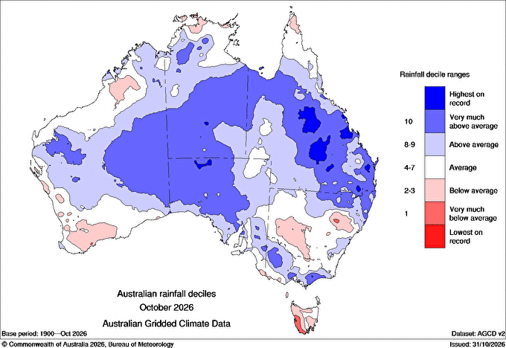
来源:澳大利亚气象局(BOM)
对上栏量的影响
降雨对全国肉牛上栏量影响显著。回顾二十年来全国肉牛上栏数据,2026年9月至10月降幅达22.6%,为二十年来最大回落幅度;仅次于它的是2021年10%的降幅,而这二十年间该时段上栏量平均增幅为6%。
尽管历年不乏9到10月上栏量走高的情况,但如此大幅度的下滑实属罕见。
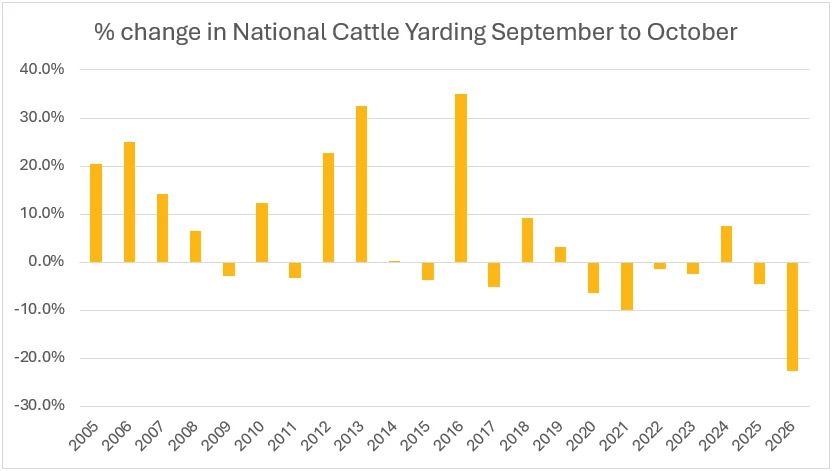
来源:国家牲畜报告系统(NLRS)
和预期一致,昆士兰州下滑最为明显,上栏量环比下跌46%;新南威尔士州次之,降幅14%;维多利亚州下降5%。
价格影响
供给在当月急剧收缩,行情随之剧烈波动,对牛价形成强力拉动。全国育肥阉牛指数与全国小牛指数在10月全月(10月1日–31日)均上涨11%。
养殖户乐见价格上涨、饲草条件改善,但10月屠宰量同步大幅下滑。由于牛源紧缺,多家加工厂决定缩减生产班次。截至10月30日当周的国家牲畜报告系统屠宰数据较往年明显走低,相较2025年下降15%、相较2024年下降8%。注:2026年有一家上报机构退出国家牲畜报告系统屠宰统计,因此该降幅存在一定放大效应。
内容供稿:亚历克斯·弗莱,澳大利亚肉类与畜牧业协会市场信息分析师
信息撰写于2026年11月6日,截至该时间点准确无误。
澳大利亚肉类与畜牧业协会(MLA)不对本刊物所载任何信息的准确性、完整性及时效性作出任何保证。用户使用或依赖本刊物任何内容,风险自行承担;因使用或依赖相关信息所造成的任何损失与损害,MLA概不承担任何责任。未经MLA事先书面许可,本刊物任何内容不得擅自转载、复制。凡使用MLA刊物、报告及相关信息,均须遵守MLA市场报告及信息使用条款。
消息来源:MLA
Rain drives sharp fall in cattle yardings
Key points
October rain in key cattle regions shook up the market.
National cattle yardings fell 22.6% from September to October, marking the steepest September to October decline in 20 years.
As processor supply tightened, some processors reduced shifts.
Widespread rain across key cattle-producing regions in October had far-reaching impacts on the cattle market, affecting yardings, prices and processor throughput.
October rainfall
Eastern Australia was forecast by the Bureau of Meteorology (BOM) to be dry throughout spring. However, conditions changed drastically last month, bringing some of the highest October rainfall on record for parts of central Queensland, and above-average falls for parts of northern NSW.
This led to a sharp pullback in the national cattle yardings as producer confidence lifted, encouraging retention while road access became an issue through much of Queensland.
While the rain has been a welcome relief for producers and backgrounders, lifting confidence and prices, the impacts have been difficult further along the supply chain for lot feeders and processors.
Source: BOM
Impact on yardings
The rain’s impact on national cattle yardings has been significant. Looking back through two decades of national cattle yarding data, the September-to-October 2026 change was a 22.6% decline, the steepest pullback in 20 years. The next closest was a 10% pullback in 2021 and the average over the 20-year period is a 6% increase in the total yarding.
While there have been years of more stock coming through from September to October, a pullback of this scale is rare.
Source: NLRS
As expected, the pullback was more prominent in Queensland, with a 46% month-on-month drop in yardings, followed by NSW at -14% and Victoria -5%.
Impact on prices
The pullback in supply over the month has been a whiplash and had strong impacts on prices over the month. Both the National Feeder Steer Indicator and the National Young Cattle Indicator lifted 11% from 1–31 October.
While the price rises and boosts to feedbases have been celebrated by producers, October has also bought a sharp drop in slaughter figures. A number of processors have made the call the call to drop shifts with supply difficult to come by. The latest NLRS slaughter figures for the week ending 30 October show a sharp decline over previous years, down 15% on 2025 levels and 8% on 2024 levels. Please note: a reporter dropping out of the NLRS slaughter report in 2026 slightly exaggerates these figures.
Attribute content to: Alex Fry, MLA Market Information Analyst.
Information is correct at time of writing on 6 November 2026.
MLA makes no representations as to the accuracy, completeness or currency of any information contained in this publication. Your use of, or reliance on, any content is entirely at your own risk and MLA accepts no liability for any losses or damages incurred by you as a result of that use or reliance. No part of this publication may be reproduced without the prior written consent of MLA. All use of MLA publications, reports and information is subject to MLA’s Market Report and Information Terms of Use.
Source:MLA

