

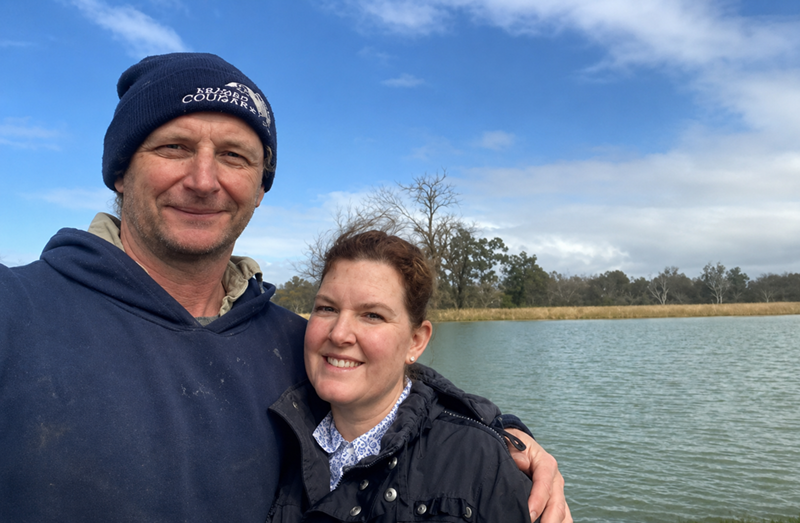
本・韦伯与艾米丽・韦伯夫妇经营着作物种植 + 美利奴绵羊养殖的混合农牧业务,通过利用作物残茬放牧,提升饲料利用效率。
作物残茬放牧一直是西澳混合农牧养殖户本・韦伯与艾米丽・韦伯夫妇的经营重点,但此前这类管理基本依靠经验和肉眼目测来判断。
如今他们改用更数据驱动的管理方式,通过活体体重监测,精准掌握作物残茬的有效利用时长以及何时需要人工干预调整。
这一转变,源于他们参与了澳大利亚肉类与畜牧业协会(MLA)、谷物研发公司(GRDC)联合开展的生产者示范基地(PDS)项目——《大南部地区作物残茬放牧策略优化》,该项目由南方土壤农业机构(Southern Dirt)合作落地。
韦伯夫妇的农场位于西澳大南部地区科乔纳普的高降雨带,同时经营种植业与美利奴绵羊养殖业务。
他们将土地分区经营:高产地块用于种植作物,永久草场及不宜耕作区域用来放牧绵羊。
和众多养殖户一样,本认为作物残茬放牧是维持载畜量、同时夏季保护天然草场的关键举措。
“作物残茬放牧能让我们维持更高载畜量,给羊群提供夏季放养场地。如果没有这些残茬资源,草场夏季会承受过大压力。”他表示。
这也与项目整体研究结论一致:作物残茬可有效填补夏秋饲草缺口,大幅降低对精补饲料的依赖。
从粗放放养模式,转向量化精准管理
传统上,本对作物残茬放牧的管理方式十分粗放:采用大群羊群依次轮牧地块,直至饲草耗尽。
生产者示范基地项目引入了一套更规范的管理模式,以每周活体体重监测为核心。
依托自身种公羊养殖已有的配套设施,包括自动分群设备和电子耳标识别系统(eID),本具备很好的条件落地这套管理方案。
他表示:“我们本来就有相关设备,操作起来很简单,只需把羊群赶进去称重即可。”
这一转变也印证了项目的核心结论:牲畜体重变化是衡量饲草营养价值最可靠的指标,准确度往往远超单纯的饲料检测和肉眼目测。
数据揭示的结果
对于本(Ben)而言,饲料检测结果在很大程度上验证了预期,但更重要的是,这些结果增加了信心和清晰度。
“饲料检测证实了我们所希望的正确方向,并为质量提供了一些具体数据——实际上质量比我预期的略好一些,”他说道。
在整个项目范围内,饲料检测揭示了茬地中清晰的营养层级结构:谷物驱动着初期的生产性能,而随着放牧的进行,价值较低的成分贡献逐渐减小。
然而,最有价值的要数活体重数据,这些数据清楚地显示了动物生产性能何时达到峰值以及何时开始下降。
在各个PDS(生产示范场)的发现结果表明:
绵羊通常在放牧初期增重显著(100克/头/天)
生产性能在放牧约20-30天时达到峰值
随后,随着饲料质量下降,活体重趋于稳定并出现下降
这使本更加认识到,合理安排轮牧时间和补饲决策的重要性。
将研究成果应用于农场实践
对本而言,参与生产示范场项目帮助他更好地预测不同茬地的持续利用时间及其表现。
“我想看看小麦茬地与麦茬地相比情况如何,这样我们就可以据此计算出相关数据以及地块能维持多久,”他说道。
这种深度的洞察力有助于更主动地进行决策,包括何时转移牲畜或引入补饲。
本现在正力求预判牲畜体况的下降,而非被动应对。
该示范项目还进一步证实了量化管理决策的价值。
农户主导示范项目的价值所在
本参与该项目,源于他与南方土壤农业机构(Southern Dirt)的合作渊源,而他也十分认可参与这类项目的实际价值。
他表示:“我一直乐于寻找改良养殖方式、提升效益的办法。能结识不同从业者,同时用数据量化日常经营工作,让自己清楚走在正确的道路上,这是非常有意义的。”
作物残茬高效利用五步法
本参与本次生产者示范基地项目,为想要优化作物残茬放牧策略的养殖户总结出了多项实用经验。
1、量化效益,拒绝凭经验臆断
活体体重监测能最直观判断作物残茬何时具备饲用价值。
2、充分利用放牧初期窗口期
前3-4周是动物生产性能最高的阶段
3、规划补饲时机
密切监测牲畜体况,在生产性能下滑前提前补饲。
4、摸清地块差异
不同作物及其残茬的有效利用时长各不相同。
5、保持系统的实用性
简单的设施配置,例如在畜栏附近放牧,可使定期称重更加便捷
随着提升养殖效率、降低饲料成本的压力日益增大,作物残茬放牧已不再只是后备选择,而是逐渐成为混合农牧体系中计划性的常规环节。采用数据驱动的管理方式,能够让这一资源发挥最大利用价值。
消息来源:MLA
Making stubbles work harder in mixed systems
Ben and Emily Webb run a mixed cropping and Merino enterprise, integrating stubble grazing to improve feed utilisation.
Stubble grazing has always been a focus for WA mixed farmers Ben and Emily Webb – but until recently, it was largely managed by experience and visual assessment.
Now, they’re taking a more data-driven approach, using liveweight monitoring to better understand how long stubbles deliver value and when to intervene.
This shift has come through their involvement in the MLA and GRDC Producer Demonstration Site (PDS) Optimising stubble grazing strategies in the Great Southern, delivered in partnership with Southern Dirt.
The Webbs’ property in the high rainfall zone at Kojonup in WA’s Great Southern region combines cropping and a Merino sheep operation.
They crop the more productive country while running sheep across permanent pastures and less arable areas.
Like many producers, Ben sees stubble grazing as essential to maintaining stocking rates while protecting pastures over summer.
“It allows us to run a higher stocking rate because we can put the sheep somewhere over the summer. Without those stubbles, it would put too much pressure on the pastures,” he said.
This aligns with broader project findings that stubbles can play a critical role in bridging the summer–autumn feed gap and reducing reliance on supplementary feeding.
From ‘set and forget’ to measured management
Traditionally, Ben’s approach to stubble grazing was straightforward. He used large mobs to graze paddocks sequentially until feed ran out.
The PDS introduced a more structured approach, centred on weekly liveweight monitoring.
With existing infrastructure from his ram breeding enterprise, including auto-drafting and electronic identification (eID), Ben was well placed to adopt the system.
“We had the set up so it was quite simple. We just ran them in and weighed them,” he said.
This shift reflects a key project insight, that liveweight change is the most reliable indicator of nutritional value, often outperforming feed tests or visual assessment alone.
What the data revealed
For Ben, feed testing results largely confirmed expectations but importantly, they added confidence and clarity.
“Feed testing reinforced what we hoped was right and put some numbers around the quality – it was actually slightly better than I expected,” he said.
Across the broader project, feed testing highlighted a clear nutritional hierarchy in stubbles, with grain driving early performance and lower-value components contributing less as grazing progresses.
However, it was the liveweight data that proved most valuable, by clearly showing when animal performance peaked and began to decline.
Findings across the PDS sites demonstrated that:
sheep typically achieve strong early gains (100g/head/day)
performance peaks around 20–30 days of grazing
liveweight then stabilises and declines as feed quality drops.
This reinforced to Ben the importance of timing grazing rotations and supplementation decisions carefully.
Applying the learnings on-farm
For Ben, being involved in the PDS has helped him better predict how long different stubbles will last and how they perform.
“I’d like to see how the wheat compares to the barley, so we can work the numbers out around that and how long the paddocks will last,” he said.
This level of insight allows for more proactive decision-making, including when to move stock or introduce supplementary feeding.
Rather than reacting to declining condition, Ben is now aiming to anticipate it.
The demonstration has also reinforced the value of quantifying management decisions.
Why producer-led demonstrations matter
Ben’s involvement in the project came through his connection with Southern Dirt, but he sees clear value in participating.
“I always like looking for ways to improve or getting a bit more out of it. It’s good to meet different people and get some numbers around what you’re doing, so you know you’re on the right track,” he said.
Five steps for stubble success
Ben’s involvement in the PDS reinforces several practical lessons for producers looking to improve their stubble grazing strategy.
1.Measure performance, don’t guess
Liveweight monitoring provides the clearest indication of when stubble is delivering value.
2.Maximise the early grazing window
The first 3–4 weeks deliver the highest animal performance.
3.Plan supplementation timing
Monitor condition closely to introduce feed before performance declines.
4.Understand paddock differences
Different crops and stubbles vary in how long they provide value.
5.Keep systems practical
Simple setups, such as grazing near yards, make regular weighing easier.
As pressure grows to lift efficiency and reduce feed costs, stubble grazing is becoming less of a fallback and more of a planned component of mixed farming systems. Applying a data-driven approach ensures this resource is used to its full potential.
Source:MLA

